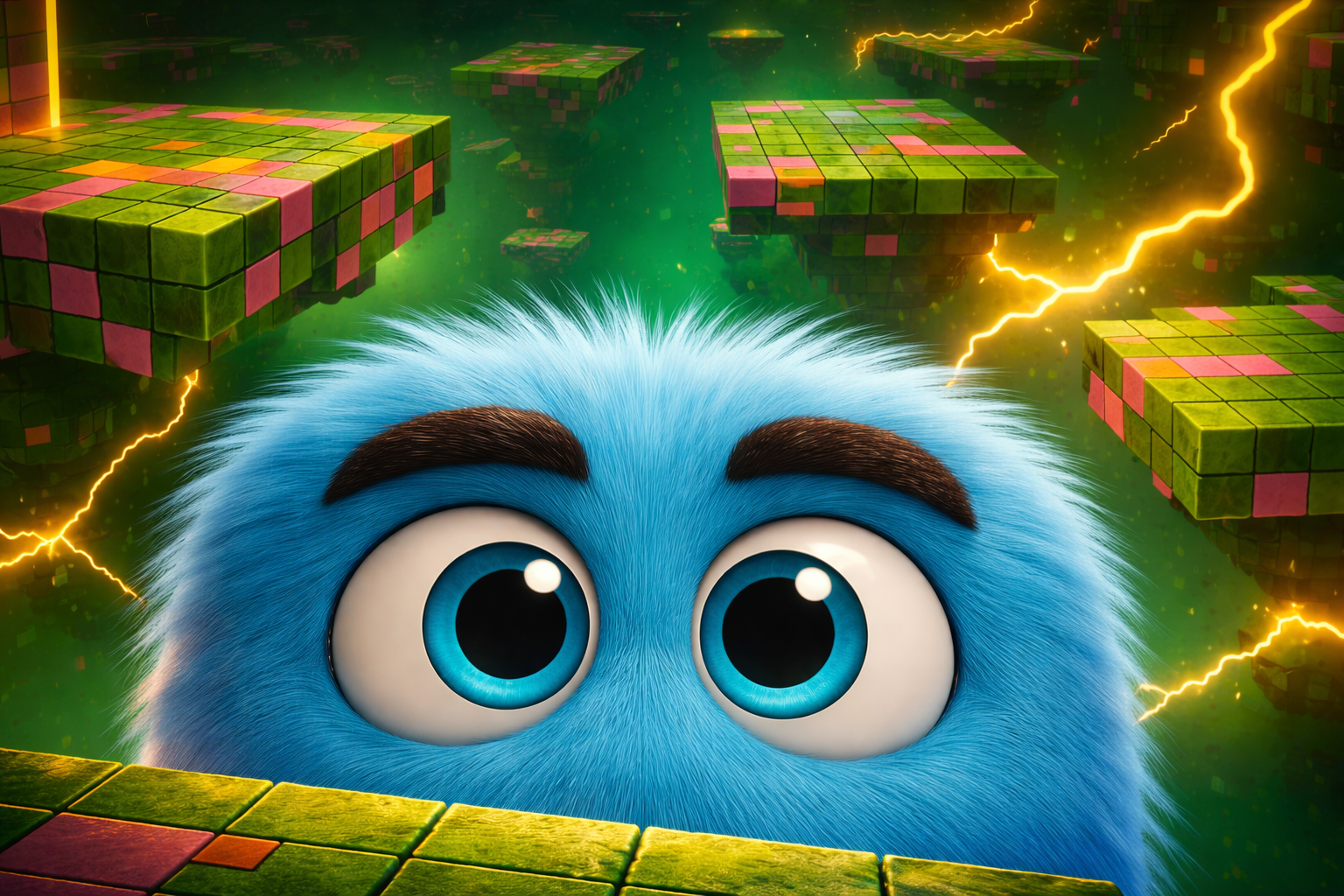
Pixel Hero
A downloadable game
Pixel Hero is a 2D platform game about survival, memory, and escape.
After decades of silence, a forgotten 1980s home computer briefly comes back to life. Electricity flows through its aging circuits, and forgotten pixels awaken — aware that they have very little time left. As systems fail and the screen threatens to go dark once more, one pixel decides not to wait.
You play as that pixel.
What kind of game is this?
Pixel Hero is a 2D platformer built around movement, timing, and environmental danger.
There is no traditional exposition or dialogue. The world itself communicates what is happening — through failing systems, unstable geometry, sound, and visual decay. Survival is not about defeating enemies, but about understanding a space that is actively breaking down.
The game focuses on:
-
Precise platforming
-
Environmental hazards
-
Atmosphere and pacing
-
Discovery through play rather than explanation
Gameplay overview
-
Tight 2D platforming with physics-based movement
-
Environmental puzzles
-
Minimal UI — information is conveyed visually and through sound
-
A single pixel navigating a collapsing digital environment
-
Increasing instability as systems fail
Patterns are not meant to be memorized. The player is expected to adapt as the rules of the world slowly shift.
The origin of Pixel Hero
At the end of 2025, I deliberately cleared unfinished work and loose ends before starting a new year.
That created something important: space.
In 2026, I decided to stop orbiting around games — building tools, frameworks, and reusable systems — and fully commit to creating complete games.
Pixel Hero is one of those commitments.
This idea has existed in various forms for years. I built prototypes. I shelved it. I picked it up again. Recently, something finally clicked: this should not just be a game, but the foundation of a larger creative idea — starting small, focused, and honest.
It all begins with a simple question:
What if an old retro computer, forgotten for years in an attic, is suddenly struck by lightning?
For a brief moment, electricity flows again.
Pixels wake up.
They realize they have very little time left.
And one pixel decides not to wait.
Development approach
This page will be updated regularly with devlogs covering:
-
Gameplay
-
Technical challenges and solutions
-
Visual and atmospheric exploration
-
Design decisions, doubts, and course corrections
Expect work-in-progress content, prototypes, and changes along the way.
Use of AI
AI may be used as a supporting tool during development, primarily for music and video.
I’m aware that this is a sensitive topic, and I’ve seen more than enough poor and soulless applications of AI myself. Used without intent, it adds noise rather than value.
In this project, AI is treated as a collaborator, not a shortcut. Design decisions, gameplay, structure, and direction remain human-driven. The goal is coherence and deliberate choice — using available tools to support the creative process rather than define it.
Planned focus (subject to change)
-
Core movement and physics refinement
-
World rules and environmental behavior
-
Visual language and sense of decay
There is no fixed release date. The priority is building a strong foundation before expanding scope.
If you’re curious where this leads, follow this page for ongoing devlog updates.